

The Numbers
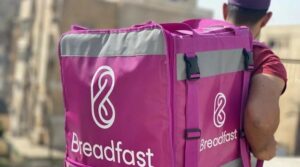
Egyptian e-commerce platform Breadfast raised $50 million in a pre-Series C round backed by Mubadala Investment Company, the World Bank’s International Finance Corporation, Saudi Arabia’s Olayan Financing Company, Japan’s SBI Investment, the European Bank for Reconstruction and Development, Y Combinator, Novastar Ventures, 4DX Ventures, AAIC Investment, and a Saudi billionaire family.
The company was valued at approximately $400 million in August 2025, with this latest round expected to increase that figure. Breadfast plans to raise a larger Series C in the first half of 2026. Proceeds will fund infrastructure expansion including warehouses, fulfillment centers, and production facilities, strengthen logistics capabilities, and support exploration of new markets in North and West Africa. The company is positioning toward a potential global IPO.
Founded in Cairo in 2017 by Mostafa Amin, Muhammad Habib, and Abdallah Nofal, Breadfast began as a fresh bread delivery service and has expanded into a vertically integrated platform offering groceries, pharmaceuticals, digital payments, private-label products, and branded coffee outlets. Private-label products account for approximately 40% of grocery sales. The company targets capturing up to 3% of Egypt’s estimated $100 billion grocery market within three years.
Breadfast operates 39 fulfillment centers across four Egyptian cities, processing nearly one million orders monthly from more than 300,000 active users. The company surpassed $150 million in annual recurring revenue (ARR) in 2024, representing a 38-fold increase in constant currency since 2021. Gross merchandise value (GMV) retention exceeds 100% after 20 months on the platform, and customer retention exceeds 80%.
Valuation trajectory:
- 2023: $257 million (Series B extension)
- Early 2024: $268 million
- August 2025: ~$400 million
- February 2026: Expected increase post-$50M round
Previous funding rounds:
- 2017: Pre-seed from 500 Global, Averroes Ventures, angel investors
- 2019: Seed round with Y Combinator participation
- November 2021: $26 million Series A led by Vostok New Ventures and Endure Capital
- 2023-2024: Undisclosed Series B extensions
- Total raised to date: $86+ million
Comparison
The African e-commerce and quick-commerce graveyard is well-populated. Jumia, the continent’s most visible e-commerce company, went public at a $2 billion valuation in 2019, peaked at $3.9 billion, and now trades at $200-300 million—a 90%+ collapse. The company burned $1 billion+ over a decade, exited multiple markets including Egypt (2020), and still hasn’t achieved profitability. In 2026, Jumia shut down Algeria operations as part of its profitability strategy, reducing from 11 markets to 7.
MaxAB, Egypt’s B2B e-grocery marketplace, raised $55 million Series A in 2021 at a reported $200+ million valuation. By 2023, the company faced operational challenges, laid off staff, and struggled with unit economics in Egypt’s deteriorating currency environment. The company went quiet on fundraising after its Series A.
Glovo, the Barcelona-based delivery platform, entered Egypt in 2018, burned through millions establishing operations, and exited in 2022 citing poor unit economics and regulatory uncertainty. DoorDash and Uber Eats both evaluated Egyptian market entry and declined, determining margins too thin and operational complexity too high.
Getir, the Turkish quick-commerce giant that raised $1.8 billion and reached an $11.8 billion valuation in 2022, shut down operations in five markets including all of Africa and the Middle East outside Turkey in 2024, admitting the model didn’t work outside its home market. Gorillas, the German 10-minute delivery startup that raised $1.3 billion, sold to Getir at a fraction of its peak valuation. Flink merged with competitors, and Jiffy shut down entirely.
Globally, quick-commerce companies discovered the same harsh reality: delivery groceries at razor-thin margins in 10-60 minutes is extraordinarily difficult to make profitable. GoPuff in the US, the closest comp to Breadfast’s vertically integrated model, raised $3.4 billion, reached a $15 billion valuation in 2021, laid off 1,500+ employees in 2022-2023, exited multiple markets, and still operates at a loss despite $2+ billion in revenue.
Breadfast’s claimed differentiators:
- Vertical integration: Owns bakeries, fulfillment centers, and last-mile delivery (unlike marketplaces like Jumia or MaxAB that relied on third-party suppliers)
- Private label: 40% of grocery sales from owned brands allows better margin control
- Egypt focus: Deep operations in one market rather than spreading across 10+ countries like Jumia
- Profitability claims: Majority of 39 fulfillment centers reportedly profitable
- Customer retention: 80%+ retention, 100%+ GMV retention after 20 months suggests strong unit economics
But these claims deserve scrutiny. GoPuff also owned warehouses and controlled inventory. Jumia also developed private labels. MaxAB also focused on Egypt initially. All burned hundreds of millions before admitting the model didn’t work.
Business Model Reality
Breadfast’s $150 million ARR with $400 million valuation equals a 2.7x revenue multiple—reasonable for a profitable, growing e-commerce business. For context, Jumia at $200-300 million market cap with $200+ million revenue trades below 1x revenue because investors know it burns cash. If Breadfast is genuinely profitable or near-profitable at scale, a 2.7x multiple is defensible.
The unit economics question is everything. Grocery delivery operates on brutal math:
- Average order value (AOV): $15-30 in Egypt
- Gross margin: 15-25% on third-party products, 30-40% on private label
- Fulfillment cost: $2-4 per order (warehouse picking, packing)
- Delivery cost: $1.50-3 per order (last mile, fuel, rider wages)
- Customer acquisition cost (CAC): $5-15 per customer
- Operating expenses: 10-15% of revenue (tech, admin, overhead)
Example order economics:
- $20 order with 40% private label, 60% third-party
- Revenue: $20
- COGS: $13.50 (30% margin on private label = $2.40 gross profit on $8, 20% on third-party = $2.40 on $12)
- Total gross profit: $6.50 (32.5% gross margin)
- Fulfillment: -$3
- Delivery: -$2
- Contribution margin: $1.50 (7.5%)
- Operating expenses: -$3 (15% of revenue)
- Net margin: -$1.50 per order (-7.5%)
At these economics, Breadfast loses money on every order. The path to profitability requires:
- Higher AOV: Get customers from $20 to $30-40 average (fewer deliveries per dollar of revenue)
- Better private label penetration: 40% to 60%+ (higher margins)
- Delivery density: More orders per square kilometer (drivers deliver 3-4 orders per trip instead of 1-2)
- Operational leverage: Spread $3M monthly operating expenses across $20M monthly revenue (15%) vs. $30M (10%)
Breadfast claims majority of fulfillment centers are profitable. This is possible in dense Cairo neighborhoods where:
- AOV is $25-30 (wealthier customers)
- Order frequency is 2-3x per week (retention working)
- Delivery density allows 4-5 stops per driver per hour
- Private label penetration is 50%+
But those profitable centers subsidize money-losing expansion into new areas, new cities, and lower-density markets. The question: does Egypt have enough high-density, high-AOV geography to support 100+ fulfillment centers and $500M+ revenue while remaining profitable?
The Egypt macro problem:
Egyptian pound collapsed from 8.8 EGP/USD (2016) to 15.7 (2020) to 30.9 (2023) to 50+ (2026). Breadfast’s “$150M ARR” and “38x growth in constant currency since 2021” hides currency devastation. If Breadfast did $150M revenue in 2024 at an average 40 EGP/USD rate, that’s 6 billion EGP. In 2021 at 15.7 EGP/USD, the equivalent would be ~$380M. So “38x growth” in constant currency might be 10x growth in actual dollar terms, with the rest being currency adjustment.
More concerning: if Breadfast’s revenue is in Egyptian pounds but investors value it in dollars at $400M, a further 30% pound devaluation (entirely possible given Egypt’s $165 billion external debt and ongoing IMF negotiations) means revenue denominated in pounds loses 30% of dollar value overnight. Unless Breadfast can pass through 30% price increases to customers (unlikely given Egypt’s 30%+ inflation already crushing consumer purchasing power), real dollar economics deteriorate.
The IPO timing question:
Breadfast is positioning for a global IPO. Recent African tech IPOs provide cautionary tales:
- Jumia (2019): IPO at $14.50, peaked at $69.50, now trades at $3-4 (down 95% from peak, 75% from IPO)
- MNT-Halan (Egypt fintech, 2024): Merged with SPAC at $1 billion valuation, trades below SPAC price within months
Public market investors have zero patience for African e-commerce losses. Breadfast needs to show:
- Profitability: Full company profitability, not just “majority of fulfillment centers”
- Growth: 40%+ revenue growth while profitable
- Market expansion: Proof the model works beyond Cairo
- Currency stability: Demonstrate resilience to Egyptian pound volatility
Attempting an IPO in 2026-2027 while Egypt remains in economic crisis (IMF bailout, 30%+ inflation, currency instability, political uncertainty) is extraordinarily difficult. Global investors can buy DoorDash (profitable, $80B market cap, US growth) or Delivery Hero (Europe, profitable segments). Why take Egypt country risk plus grocery delivery execution risk?
Risk
1. Egypt Economic Collapse: Egypt’s economy is in crisis. $165 billion external debt, 30%+ inflation, 50+ EGP/USD exchange rate, youth unemployment above 20%, and ongoing IMF negotiations for additional bailouts. If Egyptian pound devalues another 30-50% (entirely possible), Breadfast’s dollar revenue falls 30-50% even if local currency revenue stays flat. Customers with purchasing power devastated by inflation trade down from grocery delivery ($20-30 orders) to buying directly from local markets (save $2-3 delivery fee when every pound matters). The 2023-2024 Series B extensions at $257M → $268M → $400M valuation happened during relative stability. If Egypt experiences 2016-style currency crisis (60% devaluation in months), Breadfast’s valuation could halve.
2. “Profitable Fulfillment Centers” Accounting Games: Breadfast claims “majority of fulfillment centers profitable” but doesn’t disclose full company profitability. This is classic growth-stage startup accounting. Allocate direct costs (warehouse rent, labor, inventory) to fulfillment centers, declare profitable. Don’t allocate corporate overhead (tech team, marketing, executive salaries, fundraising costs) which might be $30-50M annually. Result: “profitable fulfillment centers” while the company burns $20-30M per year.
GoPuff played this game for years, claiming warehouse-level profitability while burning $300M+ annually at the corporate level. Investors caught on. If Breadfast isn’t full-company profitable after nine years, $86M+ raised, and $150M ARR, something is broken. For comparison, Toast (US restaurant tech) was profitable at $500M revenue. Shopify was profitable at $400M revenue. E-commerce companies with real unit economics reach profitability at $100-200M revenue. Breadfast at $150M still needing a Series C (not just a pre-Series C bridge) suggests they’re not profitable and need $50-100M more to get there.
3. The Jumia Playbook: Breadfast’s trajectory mirrors early Jumia: Start in one African market (Jumia Nigeria, Breadfast Egypt), raise from global VCs (Jumia had Rocket Internet/AXA/Goldman, Breadfast has Mubadala/IFC), expand to multiple markets (Jumia went to 14 countries, Breadfast planning North and West Africa), claim profitability is “around the corner,” raise more money, go public, then reality hits.
Jumia’s fundamental mistake: assumed Africa was one market where playbooks could be copy-pasted. It wasn’t. Nigeria, Kenya, Egypt, Ghana, Morocco all have different payment systems, logistics infrastructure, regulatory environments, consumer behaviors, and currency stability. Jumia burned $200M learning this lesson. If Breadfast expands to Nigeria, Ghana, Kenya, Morocco from their Egypt base, they’ll discover the same thing. Each market requires 2-3 years of iteration, $10-20M investment, local team building, regulatory navigation, and has 30-50% chance of working. Better to dominate Egypt (100M people, $400B GDP) than burn capital across five countries achieving mediocre results in all.
4. Private Label Dependency: 40% of grocery sales from private-label products is presented as strength (higher margins) but creates risk. If Breadfast’s bread, coffee, and other owned brands aren’t genuinely superior to competitors, customers will buy from alternatives. Building brands takes years and capital. Breadfast’s coffee shops compete with Costa, Starbucks, and local chains. Their bread competes with thousand-year-old Egyptian bakeries. Their packaged goods compete with Unilever, P&G, Coca-Cola.
The risk: Breadfast becomes a grocery marketplace with weak private labels that customers tolerate for convenience but don’t love. If delivery fees rise (to improve economics) or competitors offer similar convenience at lower prices, customers defect. Without strong brand loyalty, Breadfast is just logistics infrastructure—commoditized and low-margin.
5. IPO Market Timing Disaster: Planning an IPO for 2026-2027 puts Breadfast in a terrible spot. Global IPO markets favor profitable companies with strong growth. African tech companies face extra skepticism after Jumia’s collapse. Egyptian companies face country risk premium (political instability, currency volatility, regulatory uncertainty).
If Breadfast tries to IPO at $600M-800M valuation in 2026-2027 while:
- Not profitable
- Egypt in economic crisis
- Global markets skeptical of e-commerce
- Jumia trading at 90% below peak
They’ll either fail to IPO (withdraw offering, embarrassing) or price well below private valuation (down round, existing investors lose money, employees underwater on stock options). Better scenario: wait until 2028-2029, achieve profitability, demonstrate resilience through Egypt’s crisis, expand successfully to 2-3 other markets, and IPO from position of strength at $1B+ valuation.
Rushing to IPO in 2026 with $50M bridge round + $100M Series C screams “we need liquidity for early investors and employees before metrics deteriorate.” That’s a red flag.
Prediction
By August 2026 (6 months): If Breadfast announces Series C ($75M+) at $500M+ valuation, growth narrative intact. If struggles to close Series C or raises at flat/down valuation, investors souring on Egypt exposure. Watch for West Africa expansion announcements (Nigeria, Ghana, Morocco). If expansion begins 2026, aggressive growth mode. If delayed to 2027+, focusing on Egypt profitability first (smarter). Track Egyptian pound: if hits 60-70 EGP/USD, macro environment deteriorating rapidly.
By February 2027 (12 months): Success = raised $75-150M Series C at $500-700M valuation, expanded to 2+ new markets, hit $200M+ ARR, announced profitability timeline (Q3/Q4 2027), maintained 40%+ YoY growth. Partial = raised $50-75M extension at $450-500M (flat/modest growth), delayed international expansion, $175M ARR, profitability “12-18 months away.” Failure = unable to raise Series C, down round at $300-350M, shut down expansion plans, layoffs, $140M ARR (stagnant), burning $20M+ annually.
By February 2028 (24 months): Success = full company profitability, $300M+ ARR, operating in Egypt + 3 markets, IPO filing announced for 2028, valuation $800M-1B. Partial = EBITDA positive but not profitable, $225M ARR, Egypt + 1-2 markets, IPO delayed to 2029, private valuation $500-600M. Failure = still unprofitable, <$200M ARR, Egypt only, multiple markets exited, burned through Series C, attempting emergency fundraise or M&A talks.
By February 2029 (3 years, typical IPO timeline): Success = IPO completed at $1-1.5B valuation, profitable for 4+ quarters, $400M+ revenue, Egypt + 3-4 markets, stock trading above IPO price 6 months later. Partial = IPO attempted at $600-800M, stock trades below IPO price (Jumia repeat), marginally profitable, $275M revenue, growth slowing. Failure = failed IPO attempt, sold to strategic buyer at $300-400M (below peak private valuation), or still private raising Series D/E at declining valuations while burning cash.
The Critical Determinants:
- Full company profitability by Q4 2027: If Breadfast isn’t profitable with $200M+ revenue, unit economics don’t work and never will. Grocery delivery companies that aren’t profitable at $200M revenue are broken.
- Egypt macro stabilization: If Egyptian pound stabilizes at 45-50 EGP/USD and inflation drops below 15%, Breadfast can grow. If pound hits 70-80 and inflation stays 25%+, revenue in dollar terms stagnates even if growing in local currency.
- Expansion discipline: If Breadfast successfully enters Nigeria or Ghana and reaches $10M+ revenue there within 18 months, model is exportable. If burns $20M+ and exits after 2 years, should have stayed in Egypt.
- Private label strength: If private-label products reach 60%+ of sales and customers specifically choose Breadfast for their brands, strong moat. If stays at 40% and customers don’t care, commoditized.
- IPO execution: If IPO is values at 3-4x revenue while profitable and growing 35%+, success. If IPO is at <2x revenue or stock drops 30%+ within 6 months, failure.
Honest Assessment:
Breadfast has achieved something rare in African e-commerce: $150M revenue, 80%+ retention, and claimed profitability at fulfillment center level after nine years of operation. This puts them ahead of Jumia (never profitable), MaxAB (struggled in Egypt), and most quick-commerce companies globally (Gorillas, Jiffy shut down, Getir exited most markets).
The $400M valuation at 2.7x revenue is reasonable IF the company is genuinely profitable or very close. For comparison, profitable e-commerce companies trade at 2-5x revenue. Unprofitable ones trade at <1x.
But the warning signs are significant:
- After $86M+ raised and $150M revenue, why need another $50M bridge + $100M Series C if actually profitable?
- Why rush IPO in 2026-2027 during Egypt’s worst economic crisis in decades?
- Why expand to West Africa when Egypt (100M people) is underpenetrated?
- Why does “majority of fulfillment centers profitable” require qualification instead of “company profitable”?
The answers suggest Breadfast isn’t actually profitable at the company level, is burning $20-30M annually, and needs Series C to fund 18-24 more months of operations while achieving profitability and positioning for IPO. This is fine if they succeed. It’s catastrophic if Egypt’s economy deteriorates further, forcing price increases that kill demand or currency devaluation that destroys dollar economics.
The Jumia parallel is unavoidable. Jumia raised $300M+, reached $200M revenue, expanded across Africa, claimed path to profitability, went public at $2B valuation, then collapsed to $200-300M as reality hit. Breadfast is following an eerily similar playbook: raise from top-tier investors, claim operational excellence, expand aggressively, target IPO before achieving sustained profitability.
The difference: Breadfast might actually have unit economics that work in dense Cairo neighborhoods, and private label giving them margin control Jumia never had. If they can reach full company profitability at $200-250M revenue (plausible), survive Egypt’s macro crisis (possible), and avoid the temptation to burn capital across five countries (requires discipline), they could IPO successfully at $800M-1B in 2028-2029.
If they rush an IPO in 2026-2027 while unprofitable, expand too aggressively, or Egypt’s economy collapses, this becomes Jumia 2.0: promising African e-commerce company that raised $200M+, achieved impressive top-line metrics, but never cracked profitability at scale and ended up worth less than the capital invested.
The tell will be the Series C terms. If Breadfast raises $75-100M at $550-650M valuation in Q2 2026, investors believe the story. If they struggle to raise $50M at $400-450M (flat/down round), smart money is walking away. Watch the Series C announcement carefully. The size, valuation, and investor quality will reveal whether Breadfast is the next Mercado Libre (Latin American e-commerce giant, $90B market cap) or the next Jumia (African e-commerce cautionary tale, down 90%).