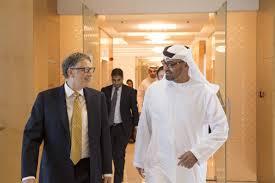



UAE’s ADQ and the Gates Foundation just announced a $40M AI-education partnership for sub-Saharan Africa—but here’s the brutal reality: 9 out of 10 African children can’t read or do basic math by age 10, and 93% of EdTech products have zero proof they actually improve learning. So is this $40M going to change outcomes, or join the graveyard of announced-but-never-deployed education initiatives?
🎯 𝗧𝗵𝗲 𝗡𝘂𝗺𝗯𝗲𝗿𝘀: — Total: $40M over 4 years ($10M/year average) — ADQ (UAE sovereign investor): Up to $20M — Gates Foundation: Presumably $20M (not explicitly stated) — Target: Sub-Saharan Africa (no specific countries named) — Focus: AI and EdTech for foundational learning (early literacy + numeracy) — Problem: 9 out of 10 children in sub-Saharan Africa can’t read or do basic math by age 10
𝗧𝘄𝗼 𝗽𝗿𝗼𝗴𝗿𝗮𝗺𝘀:
- AI-for-Education (launched 2022) – develops AI learning models + government guidance
- EdTech and AI Fund (launching 2026) – “first fund dedicated to national-level expansion of proven EdTech”
📊 𝗖𝗼𝗺𝗽𝗮𝗿𝗶𝘀𝗼𝗻 – 𝗛𝗼𝘄 𝗢𝘁𝗵𝗲𝗿 𝗘𝗱𝗧𝗲𝗰𝗵 𝗜𝗻𝗶𝘁𝗶𝗮𝘁𝗶𝘃𝗲𝘀 𝗣𝗲𝗿𝗳𝗼𝗿𝗺𝗲𝗱:
Bridge International Academies: — Raised $100M+ from Gates, Zuckerberg, others — Target: Low-cost private schools + EdTech across Africa — Reality: Closed/shrunk operations in Kenya, Uganda after regulatory battles, teacher quality issues — Lesson: Big money + good intentions ≠ scalable impact
One Laptop Per Child (OLPC): — Goal: Distribute millions of laptops to African children — Reality: Distributed laptops, minimal learning impact proven, many devices unused/broken — Lesson: Hardware deployment ≠ learning outcomes
Gates Foundation’s previous African education initiatives: — Multiple $100M+ commitments over 20 years — Some wins (vaccine distribution, malaria), education ROI unclear — Critique: Top-down approaches often don’t account for on-ground teacher capacity, infrastructure gaps
What actually worked: — USAID’s Early Grade Reading programs: $300M+ deployed, proven 0.2-0.5 grade level improvements when focused on teacher training + structured pedagogy — Pratham (India, now Africa): Low-cost interventions focusing on foundational skills, proven impact at scale — Key difference: These focused on teacher effectiveness + simple pedagogy, not tech-first solutions
The EdTech funding gap is real: — Sub-Saharan Africa gets 2% of global EdTech VC — Only 4% of African children regularly use EdTech — But here’s the question: Is that because of funding gaps, or because most EdTech doesn’t work in low-infrastructure environments?
💡 𝗕𝘂𝘀𝗶𝗻𝗲𝘀𝘀 𝗠𝗼𝗱𝗲𝗹 𝗥𝗲𝗮𝗹𝗶𝘁𝘆 – 𝗪𝗵𝗮𝘁 𝗔𝗰𝘁𝘂𝗮𝗹𝗹𝘆 𝗚𝗲𝘁𝘀 𝗗𝗲𝗽𝗹𝗼𝘆𝗲𝗱:
AI-for-Education program: — “Develops practical AI-enabled learning models” — “Offers expert guidance to governments” — Translation: Consultants, pilot programs, policy recommendations
This likely means: Most money goes to consultants, technical advisors, pilot studies. Small fraction reaches actual classrooms.
EdTech and AI Fund (launching 2026): — “First fund dedicated to national-level expansion of proven EdTech” — Key word: “proven.” How many African EdTech solutions have national-scale proof of learning impact? Maybe 5-10 max. — Fund structure not disclosed: Is it grants? Equity investments? Concessional loans?
The $10M/year deployment problem: $10M/year across sub-Saharan Africa’s 48 countries = $208K per country. Even if they focus on 5 countries, that’s $2M per country per year.
What can $2M/country buy? — Teacher training for 2,000 teachers ($1,000 per teacher) — Or EdTech platform licenses for 100,000 students ($20/student) — Or AI development costs + pilot deployment in 500 schools
That’s not nothing, but it’s not transformative. Kenya alone has 9M primary school students. $2M reaches 1% of students.
⚠️ 𝗥𝗶𝘀𝗸 – 𝗪𝗵𝗮𝘁 𝗞𝗶𝗹𝗹𝘀 𝗘𝗱𝗧𝗲𝗰𝗵 𝗜𝗻𝗶𝘁𝗶𝗮𝘁𝗶𝘃𝗲𝘀:
Infrastructure reality gap: Article mentions “responsible use of AI” but doesn’t mention that most African schools lack: — Reliable electricity (60% of sub-Saharan African schools have no electricity) — Internet connectivity (70% of rural schools have no internet) — Device access (teacher:device ratio often 1:100+)
How do you deploy AI-powered learning when teachers don’t have devices and schools don’t have power?
Teacher capacity gap: AI tools require teachers who can use them effectively. Most African teachers: — Are underpaid, undertrained, overburdened (class sizes 50-100+ students) — Lack digital literacy themselves — Face curriculum requirements that don’t integrate AI/EdTech
Giving teachers AI tools without addressing these realities = expensive shelf-ware.
Measurement problem: Article says “9 out of 10 children can’t read or do basic math by age 10.” But how do you measure if AI/EdTech fixes this?
— Learning assessments cost money and take years to show results — If you measure too early (6 months), you can’t prove impact — If you measure too late (3 years), funders lose patience — And: 93% of EdTech products have no proof of learning impact because measurement is expensive and rigorous
Deployment speed problem: “4-year partnership” = 2026-2029 deployment timeline. But: — Year 1 (2026): Set up fund, select partners, pilot programs — Year 2 (2027): Deploy to initial schools, gather data — Year 3 (2028): Adjust based on learnings, attempt scale — Year 4 (2029): Evaluate outcomes, report results
That’s optimistic. Most development programs spend 50% of timeline on setup/planning, 30% on deployment, 20% on evaluation.
The “national-level expansion” problem: Getting African governments to adopt EdTech at national scale requires: — Ministry of Education buy-in (slow, bureaucratic) — Teacher union approval (often resistant to tech) — Budget allocation (education budgets already stretched) — Procurement processes (18-24 months minimum)
Even if EdTech works in pilots, national expansion takes 5-10 years, not 4.
🔮 𝗣𝗿𝗲𝗱𝗶𝗰𝘁𝗶𝗼𝗻 – 𝗛𝗼𝘄 𝗧𝗼 𝗧𝗿𝗮𝗰𝗸 𝗜𝗳 𝗧𝗵𝗶𝘀 𝗪𝗼𝗿𝗸𝘀:
By December 2026 (12 months, fund launch): — If EdTech and AI Fund announces first investments with specific dollar amounts + company names + countries, positive signal — If fund “launches” but doesn’t disclose investments, it’s another announcement without deployment — Track: How many EdTech companies get funded? At what check sizes?
By June 2027 (18 months): — If 50,000+ African students are using AI-powered learning tools daily from this initiative, it’s scaling — If <10,000 students reached, it’s still pilot stage — If Gates Foundation publishes independent learning assessments showing 0.3+ grade level improvements, the tech works
By December 2027 (24 months, halfway): — If 2+ African governments have integrated funded EdTech solutions into national curriculum, it’s working — If still running pilots without government adoption, national scale won’t happen in remaining 2 years — Track: How much of $40M has actually deployed? If <$15M deployed by halfway point, they’re behind
By December 2029 (end of 4-year partnership): — Success benchmark: 500K+ students using funded tools daily, 0.5+ grade level improvement in reading/math proven by independent assessment, 3+ governments adopted at national scale, $35M+ of $40M actually deployed — Partial success: 100K+ students reached, pilot data showing promise, 1 government adopted — Failure: <50K students reached, no proven learning impact, zero national adoptions, <$20M deployed
The honest benchmark: If this initiative reaches 100,000 African students with proven learning improvements (0.3+ grade levels) by 2029, it’s a success by development program standards. That’s 0.01% of the 90% of children who can’t read—but it would prove the model works and could attract more funding.
If it reaches <10,000 students with unclear impact, it’s another EdTech initiative that looked good in PowerPoint but failed in classrooms.
Key questions to answer by 2027:
- How many actual students are using the tools daily? (Not “schools reached” or “teachers trained” – actual student usage)
- What does independent learning assessment show? (Not self-reported improvements)
- Did any government budget their own money to sustain this, or does it die when donor funding ends?
Want more analysis like this? I break down African funding news every week using the same framework VCs use: numbers that matter, business model reality checks, and falsifiable predictions. No press release regurgitation. Subscribe to get these in your inbox: https://substack.com/@udokanzemeke?r=5d7xxj&utm_medium=ios